

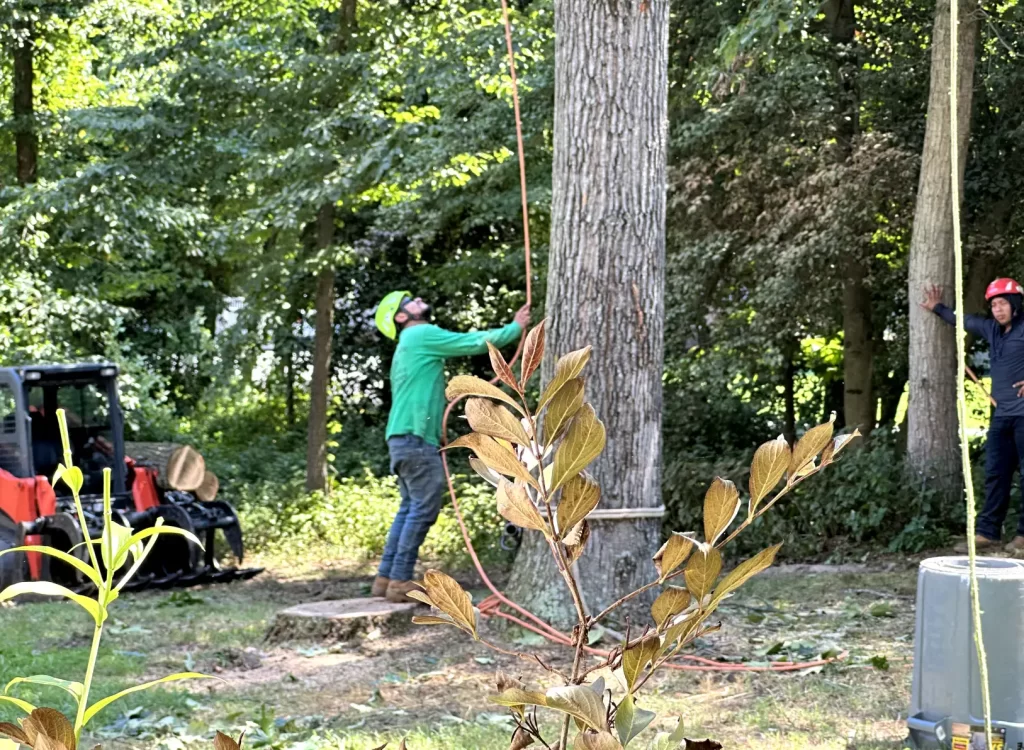
Removing a mature tree can change the look and feel of your property. Before deciding to cut one down, it is worth finding out whether the tree can be preserved safely. In many cases, professional tree care can address specific problems without requiring complete removal.
An arborist evaluates the tree’s health, structure, and surroundings to determine the best course of action. Here are the main factors that influence whether a tree can be saved.
Assessing the Tree’s Overall Health
A tree’s condition is one of the first things an arborist considers. Some trees show signs of stress, such as thinning foliage, dead branches, discolored leaves, or fungal growth, but may still respond to appropriate care.
The cause of the problem matters. Insect activity, certain diseases, soil conditions, and environmental stress can affect tree health in different ways. Identifying the underlying issue helps determine whether treatment or corrective care is likely to help.
However, advanced decay, extensive disease, or severe damage may limit the available options.
Evaluating Structural Stability
A tree can appear healthy while having structural weaknesses that create safety concerns. Large cracks in the trunk, weak branch attachments, significant leaning, and damaged roots may indicate that the tree needs a closer inspection.
An arborist assesses how these issues affect the tree’s stability and whether they can be managed. Depending on the situation, professional tree pruning may remove hazardous branches or improve the tree’s structure.
Some trees may also benefit from cabling or bracing, which can provide additional support to certain weak limbs or branch unions. These methods are not suitable for every tree, so a professional assessment is essential.
Considering the Tree’s Location
Even a tree with manageable structural problems may pose a risk if it stands close to a house, driveway, walkway, or other frequently used area.
An arborist considers the tree’s height, branch spread, surrounding structures, and the likelihood of a failure affecting people or property. The goal is to determine whether targeted care can reduce the risk to an acceptable level.
If the tree presents a serious hazard that cannot be managed effectively, professional tree removal may be the safest option.
Choosing the Right Tree Care Solution
Preserving a tree often involves more than addressing visible damage. Depending on its condition, the recommended approach may include selective pruning, appropriate health treatments, structural support, or ongoing monitoring.
Regular inspections can also help identify developing problems before they become more serious.
When Is Tree Removal Necessary?
Tree preservation is valuable, but safety must come first. A dead tree, extensive root failure, severe structural damage, or advanced decay may make removal necessary, particularly when people or buildings are at risk.
Before making a decision, consult a qualified tree care professional who can explain the findings and available options. An informed assessment helps you preserve a tree when practical and recognize when removal is the responsible choice.